Measuring SEM effectiveness: Part 2 -- data & tracking
An online travel platform invests $100M in SEM to drive traffic to their website by placing ads among the top search results for keywords relevant to their business such as "best flight deals" and "best places to explore nearby." Statistics show that most users click on one of the top ads or one of the first five organic results.
The questions are: if third-party cookies are being phased out, making traditional tracking methods less reliable, do we need first-party data to maintain accurate tracking? Are the current tracking gaps leading to underreported or misattributed conversions? Are we making smarter budget allocation and investing in high-ROI channels?
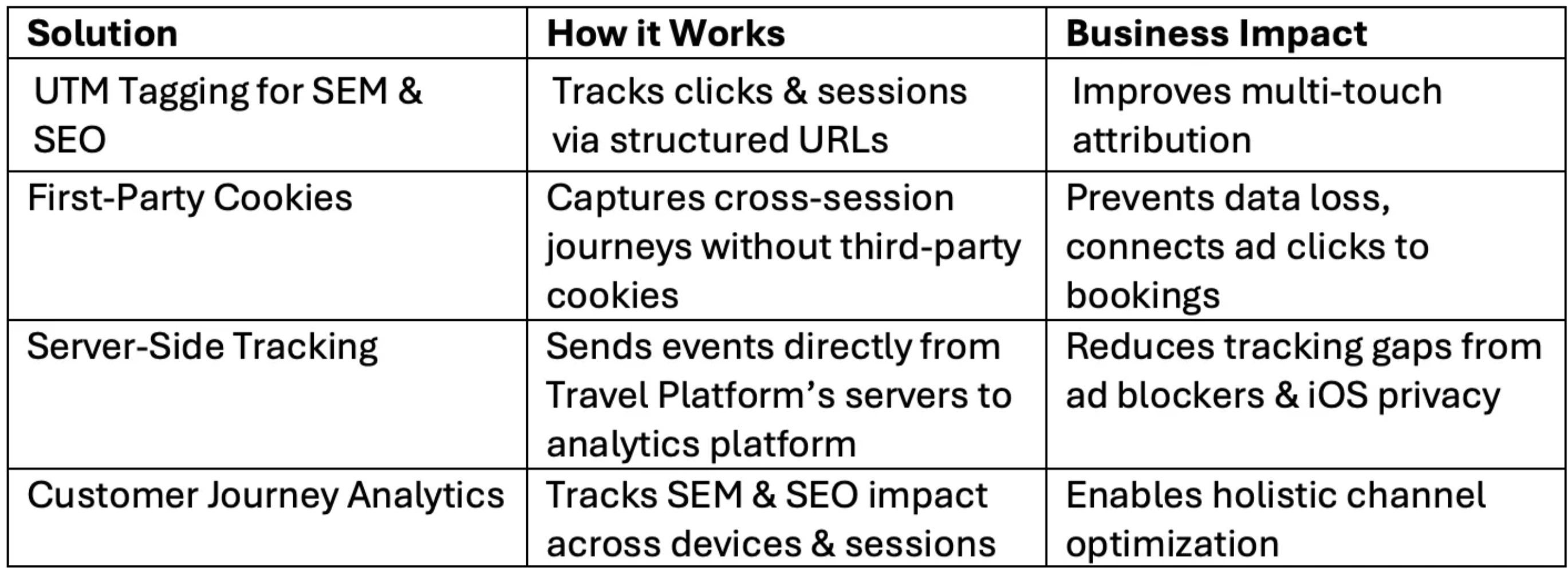
To answer these we will use UTM Tagging, First-Party Cookies, Server-Side tracking, and Customer Journey Analytics to improve measurement.
UTM tagging · First-party cookies · Server-side tracking · Customer journey analytics
1. UTM tagging for SEO & SEM attribution
Add unique UTM parameters to SEM ads, email links, and organic search pages to track user journeys. An example UTM structure:
utm_source=google&utm_medium=cpc&utm_campaign=summer_deals&utm_term=best_hotels_nyc
This ensures every click from every channel is tagged, traceable, and attributable -- giving you a clear line of sight from ad impression to conversion.
2. First-party cookies for cross-session tracking
First-party cookies store session history, search queries, and ad interactions tied to a User ID. They prevent data loss due to browser privacy changes and are fully under your control.
Example: a user searches "best hotels in Paris" today but books a week later. First-party cookies stitch the sessions together and attribute the booking to the original SEM or SEO source -- no third-party dependency required.
3. Server-side tracking to reduce data loss
Instead of relying on browser-based tracking -- which ad blockers and privacy policies can block -- events are sent directly from the travel platform's servers to analytics platforms like Google Analytics or Adobe Analytics.
Example: a user clicks a Google Ad, but tracking is blocked by their browser. With server-side tracking, the event is still captured and attributed correctly. This is especially critical given iOS privacy restrictions and the continued growth of ad blockers.
4. Customer journey analytics across devices and sessions
Customer Journey Analytics tracks the impact of SEM and SEO across devices and sessions, provides a complete view of how users engage, and identifies high-performing touchpoints.
Example: a traveler searches for "best hotels in Paris" on Google via organic (SEO), browses options but does not book. Later, they see the travel platform ad (SEM) on their phone, click, and complete the booking. Customer Journey Analytics connects these interactions -- helping optimize spend and maximize conversions across the full path to purchase.
The impact of future-proof measurement
This privacy-first measurement approach can deliver meaningful improvements across three dimensions:
- Increase the percentage of conversions accurately attributed -- from around 70% (due to data loss) to 90% or higher
- Improve incrementality accuracy from medium to high confidence
- Clarify the overlap between SEO and SEM from unclear to clearly defined
The shift to server-side, first-party measurement is not just a technical upgrade -- it is a strategic one. The platforms that invest in measurement infrastructure now will have a compounding advantage as third-party signals continue to erode.